

Article
Choosing a Reliable Mechanic in Wangaratta
As a family-owned workshop and Repco Authorised Service centre, we combine old-fashioned customer service with modern diagnostic equipment and industry-leading support...
Read moreAn engine that overheats does not always do so under the same conditions.
One vehicle might become too hot while waiting at traffic lights, another might struggle on a steep hill, while a third may complete most journeys normally before its temperature begins climbing after an hour on the road.
These differences matter. The circumstances surrounding an overheating problem can help narrow down what needs investigating, although no single temperature pattern proves that a particular component has failed.

Understanding what happens before the temperature rises can help you recognise when your cooling system needs attention...
When a vehicle is moving, air passes through the radiator to help carry heat away from the coolant.
At idle or in slow traffic, natural airflow is reduced, so the cooling fan plays a more important role. If the temperature rises while stationary but settles once the vehicle is moving, inadequate airflow through the radiator is one possible explanation. A cooling fan fault, an airflow restriction or reduced radiator efficiency may contribute.
However, this pattern does not automatically mean the fan needs replacing. Low coolant, circulation problems and other faults can also affect temperature regulation. The purpose of diagnosis is to establish which factors are actually responsible.
Pay attention to whether the temperature rises only after several minutes in traffic, whether the cabin air conditioning affects the behaviour and whether the gauge returns to its normal range once you resume driving. These observations can provide useful context for an assessment.
Climbing hills, towing and carrying heavy loads can increase the heat an engine must shed.
A cooling system that copes adequately during light driving may struggle when the demand increases.
A restricted radiator, inadequate coolant circulation, low coolant levels or a water pump problem are among the possibilities. A thermostat that is not regulating coolant flow correctly may also contribute.
The important clue is the relationship between engine load and temperature. Does the gauge rise during a long climb? Does it settle after the load decreases? Does the same problem occur on repeated journeys?
These patterns help describe the fault, but they do not identify a failed part on their own. A mechanic may need to assess coolant circulation, radiator performance, temperature readings and other relevant components to determine the cause.
If the temperature warning activates or the engine begins overheating, do not continue the journey to see whether the problem resolves itself. Stop somewhere safe and switch off the engine.
A vehicle may appear completely normal during short trips yet develop a temperature problem after extended driving.
This can happen when a fault becomes apparent only after the cooling system has been operating under sustained demand. This can happen when a fault becomes apparent only after the cooling system has been operating under sustained demand.
For example, a partially restricted radiator may struggle to transfer enough heat under certain conditions. A circulation problem may become more apparent as the engine continues running, while a coolant leak could gradually reduce the amount of fluid available.
The timing is useful evidence. Note approximately how long you have been driving, whether you were travelling at highway speed, whether the vehicle was climbing hills and whether the temperature rose gradually or suddenly.
Do not assume that a normal reading at the beginning of a journey means the system is healthy. Some problems appear only when particular operating conditions expose a weakness.
Repeatedly topping up coolant can temporarily restore the level, but it does not explain why the fluid was lost.
Coolant circulates through a system designed to retain it. If the level repeatedly falls, a leak or another underlying problem needs investigation. Potential sources include hoses, connections, the radiator, the water pump and other parts of the cooling system. Internal coolant loss is also possible in some circumstances.
Not every leak leaves a puddle beneath the vehicle. Small leaks may be difficult to notice, and evidence can vary depending on where and when the coolant escapes.
A falling coolant level can also complicate the temperature symptoms. With insufficient coolant, the system may not transfer heat as intended, increasing the risk of overheating and further damage.
Adding fluid without investigating recurring losses therefore treats the immediate symptom rather than resolving its cause. Follow the manufacturer's instructions for checking coolant, and never open a hot cooling system.
The temperature gauge is only one part of the picture. Other observations may help explain what is happening.
A sweet smell, visible residue around a hose connection, steam from beneath the bonnet or repeated low-coolant warnings may indicate coolant loss. Unusual temperature fluctuations could be associated with circulation, thermostat operation, coolant level or a temperature-sensor issue.
Likewise, a normal-looking coolant level does not rule out every cooling system fault. The radiator, fan, thermostat, water pump and other components can affect performance even when the reservoir appears adequately filled.
Treat these observations as clues rather than diagnoses. Replacing a component simply because its symptoms seem to fit can leave the actual problem unresolved.
Cooling system components work together. A new thermostat will not correct a leaking hose, and replacing a radiator will not necessarily resolve a circulation problem elsewhere.
A useful assessment considers the reported driving conditions alongside the vehicle's coolant level and condition, evidence of leakage, airflow, circulation and relevant temperature-control components. The checks required depend on the symptoms and the vehicle.
Coolant condition also matters. Using the correct formulation and following the manufacturer's servicing recommendations helps maintain corrosion protection and supports the intended operation of the system.
If the problem keeps returning, the goal should be to establish why rather than repeatedly correcting the same symptom.
An overheating warning, rapidly rising temperature gauge or steam beneath the bonnet should be treated seriously.
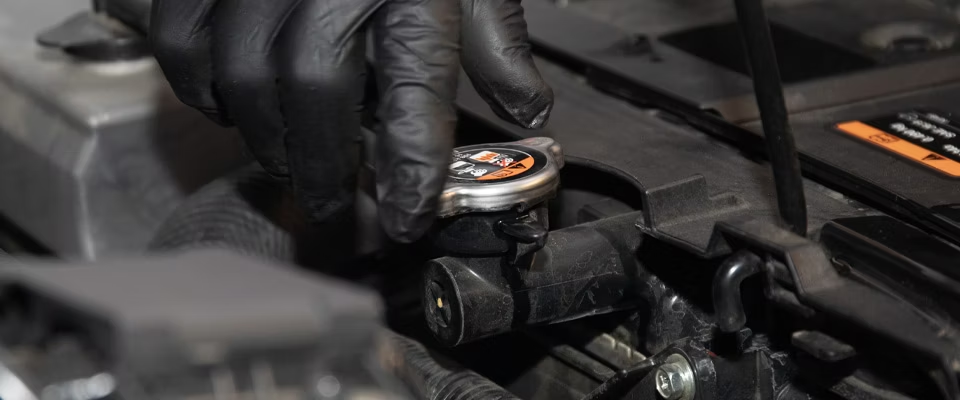
*** Some vehicles can retain significant heat and therefore pressure in the radiator for considerable time. Removing a radiator cap before the vehicle has sufficiently cooled can result in serious injuries and burns.
If coolant is repeatedly disappearing or the temperature is behaving differently from normal, arrange an assessment rather than waiting for the problem to become more severe.
When seeking cooling system service and repairs in Wangaratta, the most useful information to provide is when the fault occurs, how quickly the temperature changes and whether you have noticed coolant loss or other warning signs.
The more accurately the symptoms are described, the easier it is to direct the investigation towards the relevant parts of the system.
An engine that overheats at idle may have a different underlying issue from one that overheats only under load. Recognising that distinction is the first step towards finding the cause, protecting the engine and avoiding repairs based on guesswork.
As a family-owned workshop and Repco Authorised Service centre, we combine old-fashioned customer service with modern diagnostic equipment and industry-leading support...
Read more
A properly working air con system helps keep drivers alert, passengers comfortable, and kids and pets safe during summer travel. At Woodward's Auto Repairs (AU01862), we offer air conditioning regas to keep your climate control performing when you need it most...
Read more
Whether it’s a short drive to the coast, a weekend in the country, or a longer interstate adventure, you want your holiday to be full of fun—and completely free of unexpected car problems. At Woodward's Auto Repairs, we know that nothing spoils a festive trip faster than car trouble away from home.
Read more